How to balance loyalty points and discounts during BFCM
30 August, 2026
Post-BFCM retention: 3 proven ways to identify and convert your next VIPs
1 September, 2026

Five things need to be locked in your loyalty program before BFCM traffic hits: program foundation, retention mechanics, VIP tiers, on-site visibility, and communication flows. Each one below comes with the exact setup steps and a BON benchmark showing why it moves the needle, not just an instruction to turn it on.
Free 2026 BFCM Loyalty Setup Checklist
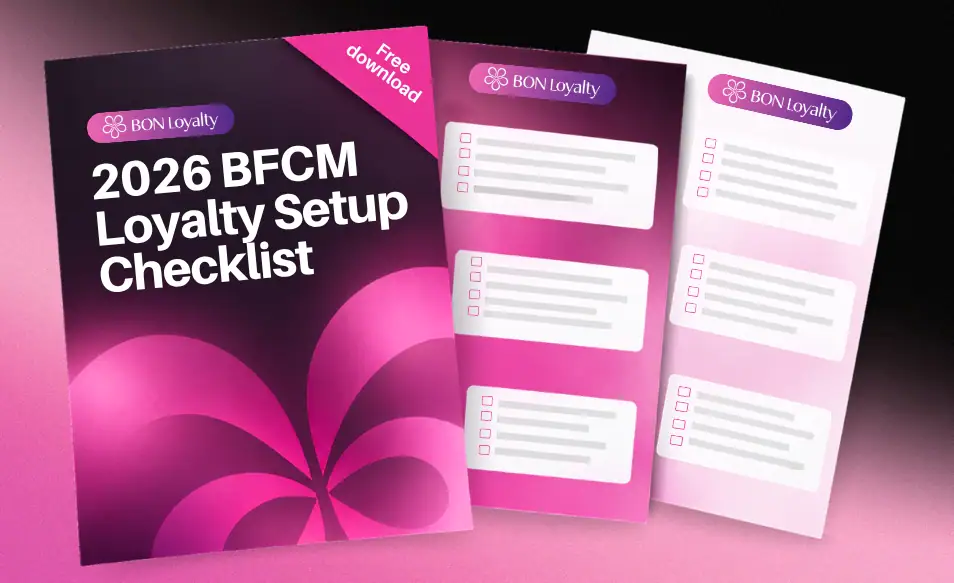
Set up a loyalty campaign that drives sales during BFCM and keeps customers coming back after the sale ends.
✓ Points and rewards that protect your margins
✓ Retention tactics for first-time buyers
✓ VIP tiers, early access, and Double Points
✓ Pre-launch, BFCM, and post-sale checks
Program foundation: the settings you can’t easily change later
Get these four settings right before BFCM. Customers start earning points the moment you turn the program on, and changing the rules under active members gets messy fast.
- Set one simple earning rule: 1 point per $1 spent (or your local equivalent). Don’t over-engineer this before BFCM, complexity can wait until January
- Set your reward value at 3-5% back per redemption, checked against your AOV and margin first. Too low and customers ignore it, too high and it eats margin. Brands in the 3-5% range see 35% higher first-redemption rates than merchants below 2% (based on BON Loyalty data, 2025)
- Pick redemption thresholds that map cleanly, for example 100 points = $5 off, 200 points = 10% off. Clean math, not confusing tiers of point values
- Keep naming simple: [Brand] Rewards, Club, or Perks, with Bronze/Silver/Gold-style tier names. Clever naming only works if it’s instantly clear. When in doubt, you should go plain.
Before you lock the number in, it’s worth thinking through your own reward value against your specific AOV and margin rather than copying the 3-5% range blind.
Retention mechanics: what separates a loyalty program from a discount code
A points balance tied only to purchases behaves like a discount code with extra steps. These four mechanics are what actually build a habit.
- Turn on birthday bonus points, a simple, personal way to keep the program warm outside of BFCM season
- Reward engagement, not just purchases: newsletter signups, social follows, product reviews
- Turn on referrals with anti-fraud rules so customers can’t refer themselves. Referred customers cost roughly 25% less to acquire than customers from paid channels (based on BON Loyalty data, 2025)
- Find your typical repeat-purchase drop-off point, then place a streak or order-booster reward just before it, for example bonus points for completing three orders within 60 days
The referral piece pays for itself fastest, but only if the mechanic itself is set up right. Setting up the referral mechanic properly is worth doing before BFCM, not bolted on during it.
VIP tiers and early access: reward status, not just spend
Discounts attract discount-hunters. Status attracts your best customers, and BFCM is exactly when that distinction pays off.
- Build 2-3 tiers based on 12-month spend or points earned
- Give each tier a perk worth having: point multipliers, early access, or free shipping, not just a badge
- Schedule VIP early access 1-2 days before your public BFCM sale goes live. It locks in revenue from core customers before competitors’ deals even start
Where you set the spend or points cutoff for each tier matters more than what you name them. How to actually set your tier thresholds walks through that math.
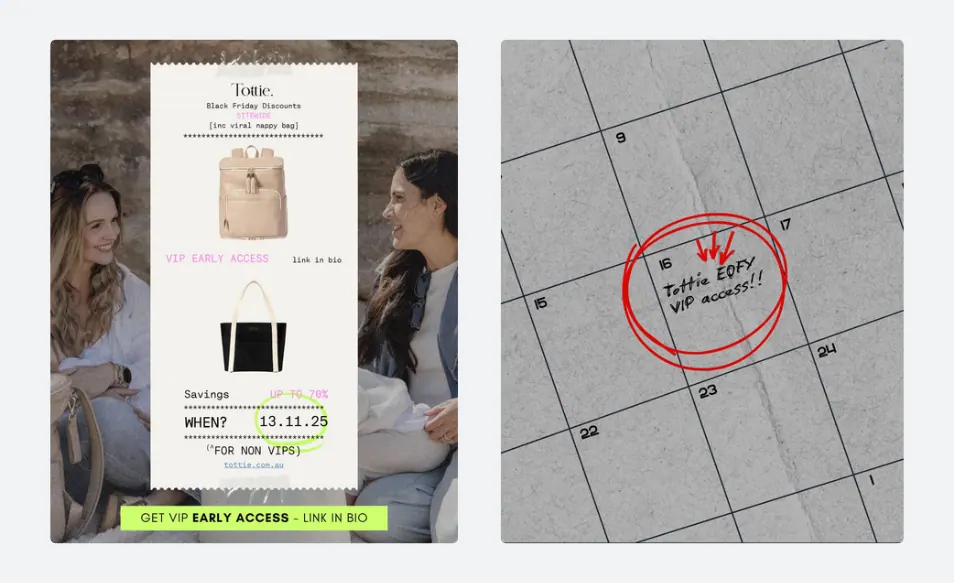
The payoff shows up directly in repeat behavior: VIP-tier members show 3x higher repeat purchase rate than members outside a tier (based on BON Loyalty data, 2025).
Make the program visible everywhere customers already look
A loyalty program that lives on one hidden page doesn’t get used. Add it to five specific touchpoints.
- Product page: a points-earned calculator near the price
- Cart: points earned this order, plus rewards available to apply
- Checkout: a points reminder and an apply-a-reward option
- Account page: balance, tier progress, and available rewards
- Post-purchase page: points confirmation and a referral prompt
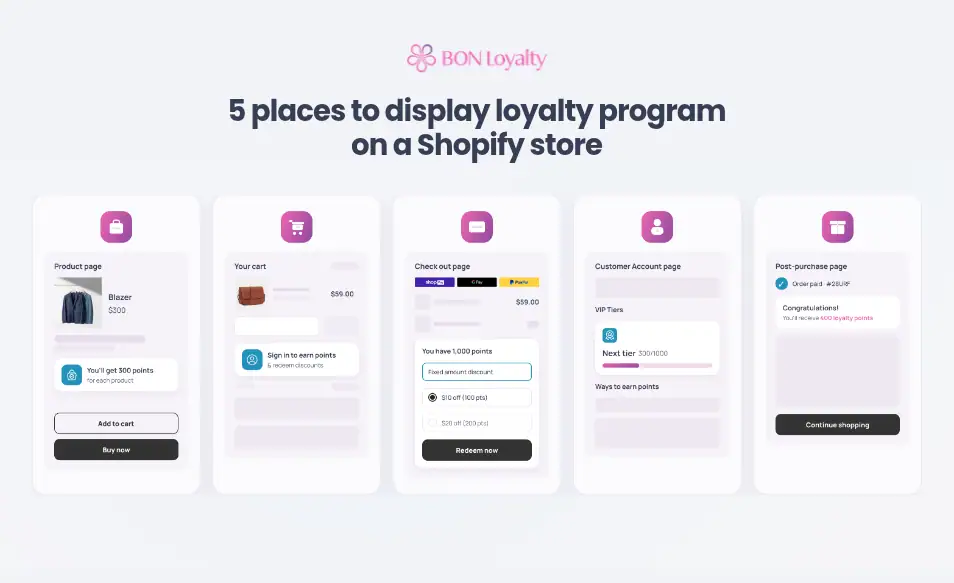
From what we’ve seen, customers rarely go looking for a rewards page on their own. They use a program when it keeps showing up while they shop, whether that’s a points total in the cart, a reward at checkout, or a quick confirmation after purchase. Email can bring members back, but it shouldn’t be the only place they hear about their rewards. If someone can browse, buy, and leave your store without seeing their points balance once, it’s hard to expect them to remember it later.
Get your communication flows live before traffic hits
One welcome email and then silence is the most common way loyalty programs fail. Six flows need to be live before BFCM traffic arrives.
- First-purchase confirmation: points earned, plus progress to the next reward
- Reward-available: a redeem button inside the email itself, not just a link
- Double-points event reminders: 24 hours before, at the start, and before it ends
- Streak progress updates
- VIP tier upgrade congratulations
- Birthday reward reminders
The payoff for getting this right: members who get the reward-available email redeem 2.5x more often within 7 days than members who don’t (based on BON Loyalty data, 2025).
Get the full checklist for free
This post covers sections 1 through 5, the setup work. The full PDF adds three things this page doesn’t: tech and QA stress-testing steps, a BFCM-week (Nov 27-30) daily monitoring list, and the after-BFCM section on keeping the program from going quiet once the sale ends.
It’s free, printable, and checkbox-formatted, built from the same setup sequence we used to help thousands Shopify brands run a successful loyalty program.
FAQ
What should I set up in my loyalty program before BFCM?
Five things: your program foundation (earning rule, reward value, redemption thresholds, naming), retention mechanics (birthday points, engagement rewards, referrals, streak rewards), VIP tiers with scheduled early access, on-site visibility across five specific touchpoints, and six automated communication flows. Lock these before BFCM traffic arrives. They’re harder to change once customers start earning points.
What reward value should I set for BFCM?
Aim for 3-5% back per redemption, checked against your average order value and margin. Brands in that range see 35% higher first-redemption rates than merchants offering under 2% back (based on BON Loyalty data, 2025). Going lower saves margin short term, but it tends to get ignored by customers entirely once BFCM discount noise sets in.
When should VIP early access start before BFCM?
Start VIP early access 1-2 days before your public sale goes live. It locks in revenue from your best customers before competitors’ deals start, and VIP-tier members already show 3x higher repeat purchase rates than non-tier members (based on BON Loyalty data, 2025). That short window is enough to convert your most loyal shoppers before the inbox gets crowded.
What’s the difference between this checklist and a BFCM QA checklist?
This checklist covers program setup: earning rules, tiers, visibility, and comms, all of which need to be locked weeks ahead. A separate QA pass, stress-testing load times and confirming discount codes and tracking integrations work correctly, happens closer to launch, once your setup is already locked. See our pre-BFCM loyalty QA checklist for that part.
A configured program is what turns a BFCM sale into a repeat customer
A loyalty program that isn’t configured before BFCM traffic hits is just a signup form. Foundation, retention mechanics, VIP tiers, visibility, and comms are what turn a one-time BFCM sale into a customer who comes back in December and January.
Get the full checklist for the testing and post-BFCM steps that come next.
Author